In 1978
Donald J. Kessler and Burton G. Cour-Palais published
Collision Frequency of Artificial Satellites: The Creation of a Debris Belt. Wikipedia
notes that:
It describes a situation in which the density of objects in low Earth orbit (LEO) becomes so high due to space pollution that collisions between these objects cascade, exponentially increasing the amount of space debris over time.
This became known as the
Kessler Syndrome. Three decades later, shortly after Iridium 33 and Cosmos 2251 collided at 11.6km/s, Kessler published
The Kessler Syndrome, writing that the original paper:
predicted that around the year 2000 the population of catalogued debris in orbit around the Earth would become so dense that catalogued objects would begin breaking up as a result of random collisions with other catalogued objects and become an important source of future debris.
And
that:
Modeling results supported by data from USAF tests, as well as by a number of independent scientists, have concluded that the current debris environment is “unstable”, or above a critical threshold, such that any attempt to achieve a growth-free small debris environment by eliminating sources of past debris will likely fail because fragments from future collisions will be generated faster than atmospheric drag will remove them.
Below the fold I look into the current situation.
How Likely Is A Kessler Event?
Fast forward another 17 years and Hugh G. Lewis and Donald J. Kessler (in his mid-80s) recently published
CRITICAL NUMBER OF SPACECRAFT IN LOW EARTH ORBIT: A NEW ASSESSMENT OF THE STABILITY OF THE ORBITAL DEBRIS ENVIRONMENT. Their abstract states that:
Using data from on-orbit fragmentation events, this paper introduces a revised stability model for altitudes below 1020 km and evaluates the March 2025 population of payloads and rocket stages to identify new regions of instability. The results indicate the current population of intact objects exceeds the unstable threshold at all altitudes between 400 km and 1000 km and the runaway threshold at nearly all altitudes between 520 km and 1000 km.
This and other recent publications attracted the attention not only of two well-known YouTubers,
Sabine Hossenfelder and
Anton Petrov, but also of me.
Lewis and Kessler's conclusion mirrors that of the
ESA Space Environment Report 2025 from 1
st April, 2025 (my emphasis):
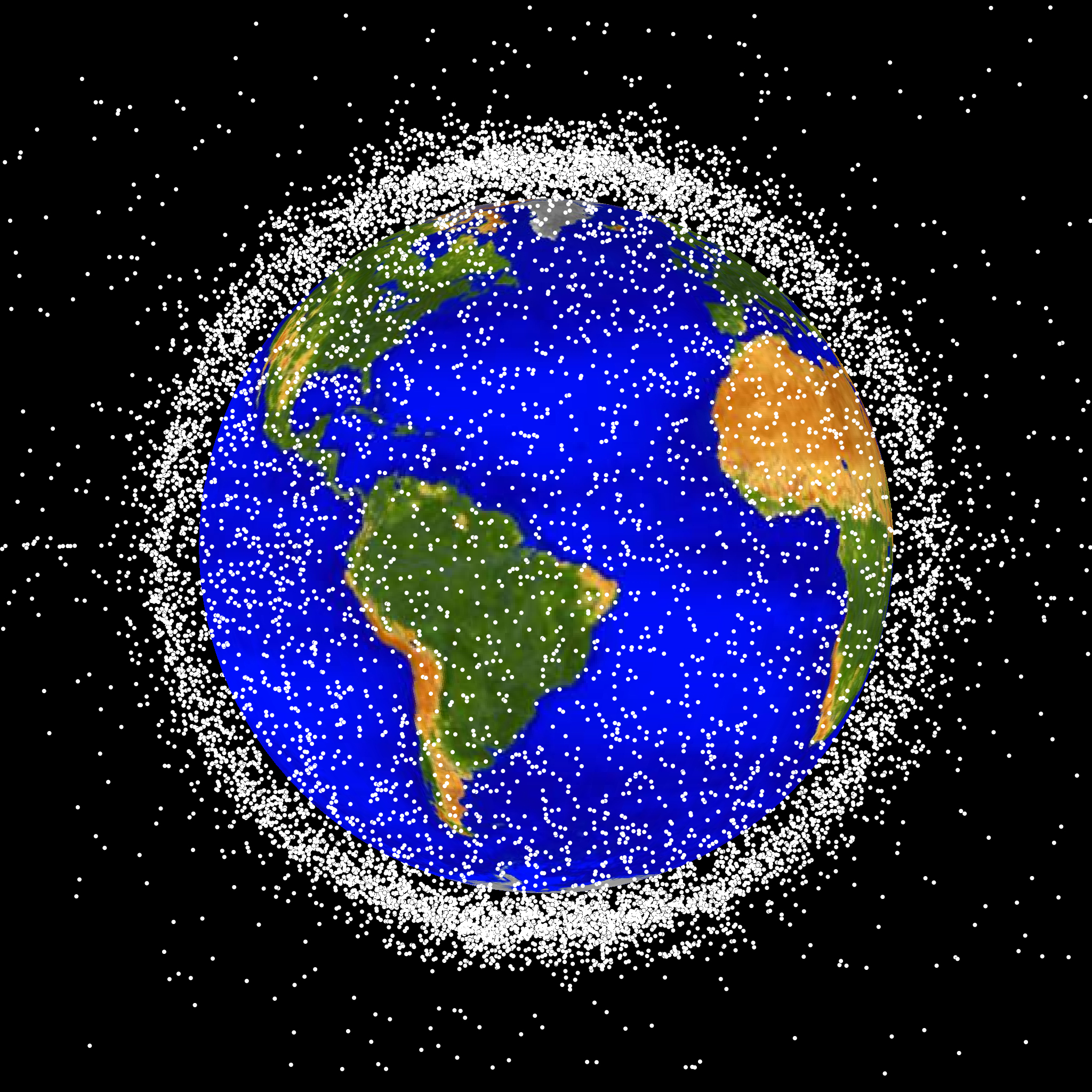
The amount of space debris in orbit continues to rise quickly. About 40,000 objects are now tracked by space surveillance networks, of which about 11 000 are active payloads.
However, the actual number of space debris objects larger than 1 cm in size – large enough to be capable of causing catastrophic damage – is estimated to be over 1.2 million, with over 50.000 objects of those larger than 10 cm.
...
The adherence to space debris mitigation standards is slowly improving over the years, especially in the commercial sector, but it is not enough to stop the increase of the number and amount of space debris.
Even without any additional launches, the number of space debris would keep growing, because fragmentation events add new debris objects faster than debris can naturally re-enter the atmosphere.
To prevent this runaway chain reaction, known as Kessler syndrome, from escalating and making certain orbits unusable, active debris removal is required.
Another of the recent publications is Sarah Thiele
et al's
An Orbital House of Cards: Frequent Megaconstellation Close Conjunctions which focuses on the requirement for satellites to maneuver to avoid potential collisions, and what would happen if, for example, a solar storm disrupted the necessary command-and-control:
While satellites provide many benefits to society, their use comes with challenges, including the growth of space debris, collisions, ground casualty risks, optical and radio-spectrum pollution, and the alteration of Earth's upper atmosphere through rocket emissions and reentry ablation. There is potential for current or planned actions in orbit to cause serious degradation of the orbital environment or lead to catastrophic outcomes, highlighting the urgent need to find better ways to quantify stress on the orbital environment. Here we propose a new metric, the CRASH Clock, that measures such stress in terms of the timescale for a possible catastrophic collision to occur if there are no satellite manoeuvres or there is a severe loss in situational awareness. Our calculations show the CRASH Clock is currently 5.5 days, which suggests there is limited time to recover from a wide-spread disruptive event, such as a solar storm. This is in stark contrast to the pre-megaconstellation era: in 2018, the CRASH Clock was 164 days.
They estimate that:
In the densest part of Starlink’s 550 km orbital shell, we expect close approaches (< 1 km) every 22 minutes in that shell alone.
For the whole of Earth orbit they estimate the time between < 1 km approaches at 41 seconds.
Will Things Get Worse?
Nehal Malik's
Space Is Getting Crowded: Starlink Dodged 300,000 Collisions illustrates the scale of the problem:
According to a recent report filed by SpaceX with the U.S. Federal Communications Commission, Starlink satellites performed roughly 300,000 collision-avoidance maneuvers in 2025 alone. The figures, first reported by New Scientist, offer a rare look at just how crowded low-Earth orbit has become — and how aggressively SpaceX is managing risk as its constellation scales.
...
On average, the 300,000 maneuvers worked out to nearly 40 avoidance actions per satellite last year. That number is rising quickly, with estimates suggesting Starlink could be performing close to one million maneuvers annually by 2027 if growth continues at its current pace.
While it is true that
Starlink is careful:
What’s particularly notable is how conservative SpaceX’s approach is compared to the rest of the industry. While the typical standard is to maneuver when the risk of collision reaches one in 10,000, SpaceX reportedly initiates avoidance at a far lower threshold of roughly three in 10 million.
Nevertheless Starlink's rate of maneuvers is
doubling every six months, which seems likely to force a less conservative policy. The average satellite is moving every 9 days. At this doubling rate, by the end of 2027 the average satellite would move about twice a day.
Starlink currently has over
10,000 satellites, with plans for 12,000 in the short term. I believe the collision probability goes as the square of the number, so that will mean moving on average every 6.25 days. Their eventual plan for 42,000 would mean twice a day, or in aggregate about one move per second.
In order to pump SpaceX/xAI/Twitter stock in preparation for a planned IPO, Musk recently pivoted from
cars, weird
pickup trucks,
self-driving cars,
robotaxis,
humanoid robots and
Mars colonization to
data centers in space. He
claimed that by 2031 SpaceX/xAI/Twitter would operate a million satellites forming a huge AI data center. Scaling up from the current maneuver rate gets you to about a move every 125ms in aggregate.
How Bad Would A Kessler Event Be?
My friend Robert Kennedy considers the implications of a Kessler event in low Earth orbit:
- Obviously the national security repercussions for the western world, especially the U.S., would be severe with so many force multipliers going away at once. Presenting an opportunity for adversaries to attack us, maybe.
- The overall global space market, presently ~$700B/yr & growing fast, would shrink dramatically. This contraction in turn would be amplified in the world's stock markets since space activity is central to so many Big Tech equities now, and space infrastructure is so deeply embedded many other enterprises' business models. ... Even modest P/E ratios suggest that an order of magnitude more, maybe two (~$10-100T) of paper wealth would disappear.
- The space insurance market would collapse under the burden of covered claims. Re-insurers could not handle so much at once. Companies that chose to self-insure would probably go under after such a casualty. Without insurance, most enterprises could not afford to conduct space missions.
- The space launch market would collapse, leaving only national launch capabilities maintained by individual nations for their individual non-market reasons. All those innovative rocket companies popping up to serve the mega-constellations would go away once their prime customers did. Global launch tempos would fall by more than half, from 200+/yr to well under 100/yr of a generation ago. Forget the $100 per kg that ... Starship was aiming for, price per kilogram would return to what it was 30 years ago, ~$10-20K/kg. Say goodbye to cheap rideshares to LEO. Even running the gauntlet thru LEO would be fraught, as the Chinese learned just a few months ago when their spacecraft was damaged by debris on the way up, necessitating the premature return of the undamaged pre-deployed spaceship to rescue the earlier crew.
- Since 99% of Cubesats fly in LEO, the ecology of COTS parts that has sprung up to serve the Cubesat revolution would probably go away, or back into the garage at least. It might even disappear altogether if authorities of various spacefaring nations ban Cubesats. (Literally "throwing out the baby with the bathwater".) Don't underestimate the inherent conservatism of oligarchs to use a crisis to stomp on upstarts.
Can LEO Be Cleaned Up?
In 2027 the ESA plans
ClearSpace-1, an experimental mission to deorbit a dead satellite. The plan is to grab the satellite then retrofire. In principle this technique is a workable but expensive way to remove large targets before a collision fragments them, but it isn't viable for most of the results of a collision.
What Else Can Go Wrong?
The frenzy to exploit the commons of Low Earth Orbit doesn't just threaten to cut humanity off from space in general and the benefits that LEO can provide. The process of getting stuff up there and its eventual descent threatens to accelerate the process of trashing the commons of the terrestrial environment.
Going Up
Elon Musk's proposed
one million satellite data center is estimated to require launching a Starship about every hour 24/7/365. Laura Revell
et al's
Near-future rocket launches could slow ozone recovery describes one problem:
Ozone losses are driven by the chlorine produced from solid rocket motor propellant, and black carbon which is emitted from most propellants. The ozone layer is slowly healing from the effects of CFCs, yet global-mean ozone abundances are still 2% lower than measured prior to the onset of CFC-induced ozone depletion. Our results demonstrate that ongoing and frequent rocket launches could delay ozone recovery. Action is needed now to ensure that future growth of the launch industry and ozone protection are mutually sustainable.
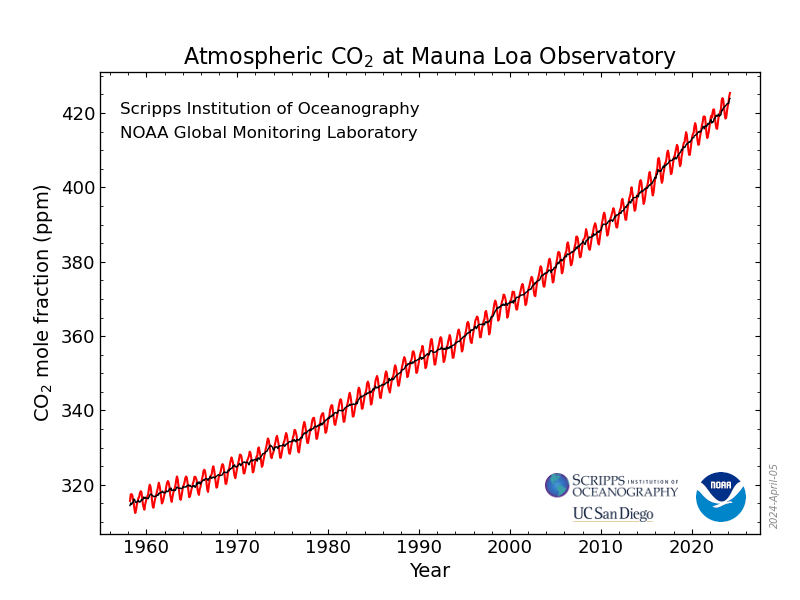
Black carbon heats the stratosphere, although the increasing use of methane reduces the amount emitted per ton of propellant. Each Starship launch uses about 4000 tons of LOX and about 1000 tons of methane. Assuming complete combustion, this would emit about 1,667 tons of CO2 into the atmosphere. So Musk's data center plan would dump about 17 megatons/year into the atmosphere, or about as much as
Croatia.
Coming Down
All this mass in LEO will eventually burn up in the atmosphere. Jose Ferreira
et al's
Potential Ozone Depletion From Satellite Demise During Atmospheric Reentry in the Era of Mega-Constellations describes the effects this will have:
This paper investigates the oxidation process of the satellite's aluminum content during atmospheric reentry utilizing atomic-scale molecular dynamics simulations. We find that the population of reentering satellites in 2022 caused a 29.5% increase of aluminum in the atmosphere above the natural level, resulting in around 17 metric tons of aluminum oxides injected into the mesosphere. The byproducts generated by the reentry of satellites in a future scenario where mega-constellations come to fruition can reach over 360 metric tons per year. As aluminum oxide nanoparticles may remain in the atmosphere for decades, they can cause significant ozone depletion.
Can A Kessler Event Be Prevented?
Clearly, reducing the risk of a Kessler incident requires international cooperation. We have one somewhat successful example of a international cooperation to mitigate a similar "
Tragedy of the Commons".Thirty-eight years ago the
Montreal Protocol was agreed, phasing out the chemicals that destroy the ozone layer.
Wikipedia reports that:
Due to its widespread adoption and implementation, it has been hailed as an example of successful international co-operation.
It has been
effective:
Climate projections indicate that the ozone layer will return to 1980 levels between 2040 (across much of the world) and 2066 (over Antarctica).
But note that it will have taken almost 80 years from the agreement for the environment to recover fully. And that it appears to be the
exception that proves the rule:
effective burden-sharing and solution proposals mitigating regional conflicts of interest have been among the success factors for the ozone depletion challenge, where global regulation based on the Kyoto Protocol has failed to do so.
The Kyoto Protocol attempted to mitigate the effects of greenhouse gas emissions. Of particular importance was that the Montreal Protocol was an application of the
Precautionary Principle because:
In this case of the ozone depletion challenge, there was global regulation already being implemented before a scientific consensus was established.
...
This truly universal treaty has also been remarkable in the expedience of the policy-making process at the global scale, where only 14 years lapsed between a basic scientific research discovery (1973) and the international agreement signed (1985 and 1987).
In
1.5C Here We Come I critiqued the attitudes of the global elite that have crippled the implementation of the Kyoto Protocol. I think it is safe to say that the prospect of applying the Precautionary Principle to Low Earth Orbit is even less likely.


14 comments:
The only industry I can think of as benefiting from ozone depletion is the SPF industry, which is a small part of the fashion and cosmetics industries. But if force multipliers disappear then a lot of people stand to make a lot of money as countries ramp up defense spending even more than now.
"It is difficult to get a man to understand something, when his salary depends upon his not understanding it."
The glass repairer loves a hail storm.
The European Space Agency is developing a system for mitigating debris in low Earth orbit called OMLET, for Orbital Maintenance via Laser momEntum Transfer. The idea is to use a 50KW laser system and adaptive optics to alter the orbit of target debris.
The paper is TOWARDS AN ENGINEERING STATION FOR PERFORMING SPACE-DEBRIS REMEDIATION BY MEANS OF HIGH-POWER LASER RADIATION by Rodmann et al:
"The use of ground-based laser technology is making a significant contributions to this effort. Firstly, the use of pulsed lasers to accurately measure the ranges to space debris objects improves orbit determination and yielding smaller covariances. Secondly, high-power laser radiation (either pulsed or continuous wave) transmitted from the ground and through Earth’s atmosphere could be used to change the orbit of a space debris object before a predicted high-risk conjunction with an operational space asset. A global network of LMT station could also be used in debris-vs-debris conjunction scenarios, thereby contributing to a more sustainable space environment."
Note that this system would, in effect, be an anti-satellite weapon.
Bob Berwyn reports that Study shows how rocket launches pollute the atmosphere:
"New research published Thursday bolsters growing concerns that a handful of companies and countries are using the global atmospheric commons as a dumping ground for potentially toxic and climate-altering industrial waste byproducts from loosely regulated commercial space flights.
The new study analyzed a plume of pollution trailing part of a Falcon rocket that crashed through the upper atmosphere on Feb. 19, 2025, after SpaceX lost control of its reentry. The rocket was launched earlier that month, carrying 20 to 22 Starlink satellites into orbit."
And:
"A 2024 report from the United Nations University found that the rapid growth of commercial space activity is outpacing unevenly followed and voluntary guidelines. Without more global monitoring and collaboration, the rising demand for satellite launches will accelerate pollution risks in the shared space environment, the report warned.
International agreements covering rocket pollution include the Outer Space Treaty and Liability Convention. They require countries to avoid harmful contamination and to accept responsibility for damage caused by their space objects. Those principles are reflected by several International Court of Justice rulings and opinions on preventing cross-border environmental harm. Debris and atmospheric pollution from space launches disperses globally, affecting many nations that do not launch rockets at all."
More news on the environmental impact of reentry from orbit in Robin Wing et al's Measurement of a lithium plume from the uncontrolled re-entry of a Falcon 9 rocket:
"A 10-fold enhancement of lithium atoms was detected at 96 km altitude by a resonance lidar at Kühlungsborn, Germany, approximately 20 hours after the uncontrolled re-entry of a Falcon 9 upper stage. The upper-atmospheric extension of the ICON general circulation model, nudged to ECMWF, was used to calculate winds. Backwards trajectories, including wind variability as measured by radar, traced air masses to the Falcon 9 re-entry path at 100 km altitude, west of Ireland."
The lithium traveled "approximately 1600 km, from the west coast of Ireland over approximately 20 hours."
Scott Manley has visualized SpaceX's million birds.
Brandon Vigliarolo reports on Musk's million bird plan in SpaceX wants to fill Earth orbit with a million datacenter satellites:
"Elon Musk's pie-in-the-sky plan to launch a massive orbital datacenter satellite constellation has taken a rapid step closer to reality with the Federal Communications Commission advancing SpaceX's application for public comment, technical feasibility be damned.
SpaceX applied for permission to launch as many as one million satellites for its proposed orbital datacenter constellation on January 30, and the FCC's Space Bureau has already accepted [PDF] the application for filing just five days later, though perhaps just so it can collect enough public comments to shoot the ridiculous idea down before it gets beyond the Muskian brainstorm stage (we inquired, but didn't hear back)."
Please comment on this by the deadline of March 9 using the AAS instructions and this template.
The public comment period is over for Reflect Orbital's plan for a constellation of 50K satellites, each of which would deliver as much light as the full moon to Earth. Apart from the risk of a Kessler event, people should remember that orbital mirrors were used as devastating weapons in Kim Stanley Robinson's Mars Triolgy.
Oh my god. I thought the SpaceX constellation was bad. The Reflect Orbital test is horrific.
I don't care about their use as weapons. I care about their seemingly intended effect of roasting the Earth during the time the Earth is supposed to be radiating excess heat away.
The AAS site says that the 3-9 deadline is for Reflect Orbital comments, and that the SpaceX deadline was yesterday (March 6th).
Jon Brodkin's Starlink satellite breaks apart into “tens of objects”; SpaceX confirms “anomaly” is worrying but not the start of a Kessler event:
"it seems that something caused a Starlink broadband satellite to break apart into at least tens of pieces. LeoLabs, which operates a radar network that can track objects in low Earth orbit, said in an X post that it “detected a fragment creation event involving SpaceX Starlink 34343,” one of the 10,000 or so Starlink satellites in orbit.
...
LeoLabs said the breakup was “likely caused by an internal energetic source rather than a collision with space debris or another object.” Because of “the low altitude of the event, fragments from this anomaly will likely de-orbit within a few weeks,” it said."
Brodkin notes that:
"LeoLabs said yesterday that the new event is similar to one from December 17, 2025, which also produced “tens of objects in the vicinity of the satellite” and appeared to be “caused by an internal energetic source” rather than a crash with another object. LeoLabs said it wants more information on the anomalies."
Linda Geddes reports that Satellite mirror plans could disrupt sleep and ecosystems worldwide, scientists say:
"Proposals to deploy reflective mirrors and up to 1m more satellites in low Earth orbit could have far-reaching consequences for human health and ecosystems, leading sleep and circadian rhythm researchers have said.
Presidents of four international scientific societies representing about 2,500 researchers from more than 30 countries are among those who have raised concerns in letters to the US Federal Communications Commission (FCC)."
The Guardian has a nice interactive about the Kessler Syndrome by Frederick O'Brien, Ashley Kirk and Oliver Holmes entitled ‘This feels fragile’: how a satellite-smashing chain reaction could spiral out of control.
On orbit isn't the only place space debris can be dangerous, as Selam Gebrekidan reported in A Ton of Space Junk Tumbles Unpredictably to Earth Every Week:
"In 2024, discarded hardware from the International Space Station crashed into a Florida home. Early last year, part of a SpaceX rocket landed near a busy shopping mall in Poznan, Poland. Another piece was found near the city’s airport, according to the Polish Space Agency.
Months later, a defunct Chinese satellite barreled down over Tenerife, one of the Canary Islands of Spain. The three-metric-ton satellite sent shock waves across the region before fragmenting and burning in the air.
In October, miners discovered burning debris on a desert road in Western Australia. Recently, giant “space balls” washed ashore on an Australian beach."
Eric Berger reports on the looming Kessler event in A new report from Europe raises serious alarms about orbital collisions:
"As part of the report, the European scientists modeled a number of different scenarios. Assuming that satellite launches continue to increase—by far the most likely trend—even if operators continue to follow best practices in terms of disposing of older satellites and avoiding collisions, the orbital environment will still become significantly more cluttered.
“The extrapolation of our current behavior, which assumes the continuation of explosion in orbits at current rates, adherence by constellations to at least the minimum desirable post-mission disposal success rates, and continuation of the currently estimated post-mission disposal success rates for all other objects, leads to an unstable environment with collision rates increasing exponentially,” the report states.
In its technically precise language, the European Space Agency is essentially saying we’re on a road that could ultimately lead to something like the Kessler syndrome.
Post a Comment