Tuesday, February 24, 2026

Tesla's Not-A-Robotaxi Service

Source
I have now seen the fabled CyberCab three times in real life. It has two seats, one of them fully equipped with human driver interface equipment. In each case a human was using them to drive the car, which is necessary in California because Fake Self-Driving is a Level 2 driver assistance system that requires a human behind the wheel at all times. A Robotaxi that requires a human driver and can carry at most one passenger isn't going to be a economic success.

Fred Lambert has two posts illustrating the distance between Musk's claims and reality. Below the fold I look at both of them:

Tuesday, February 17, 2026

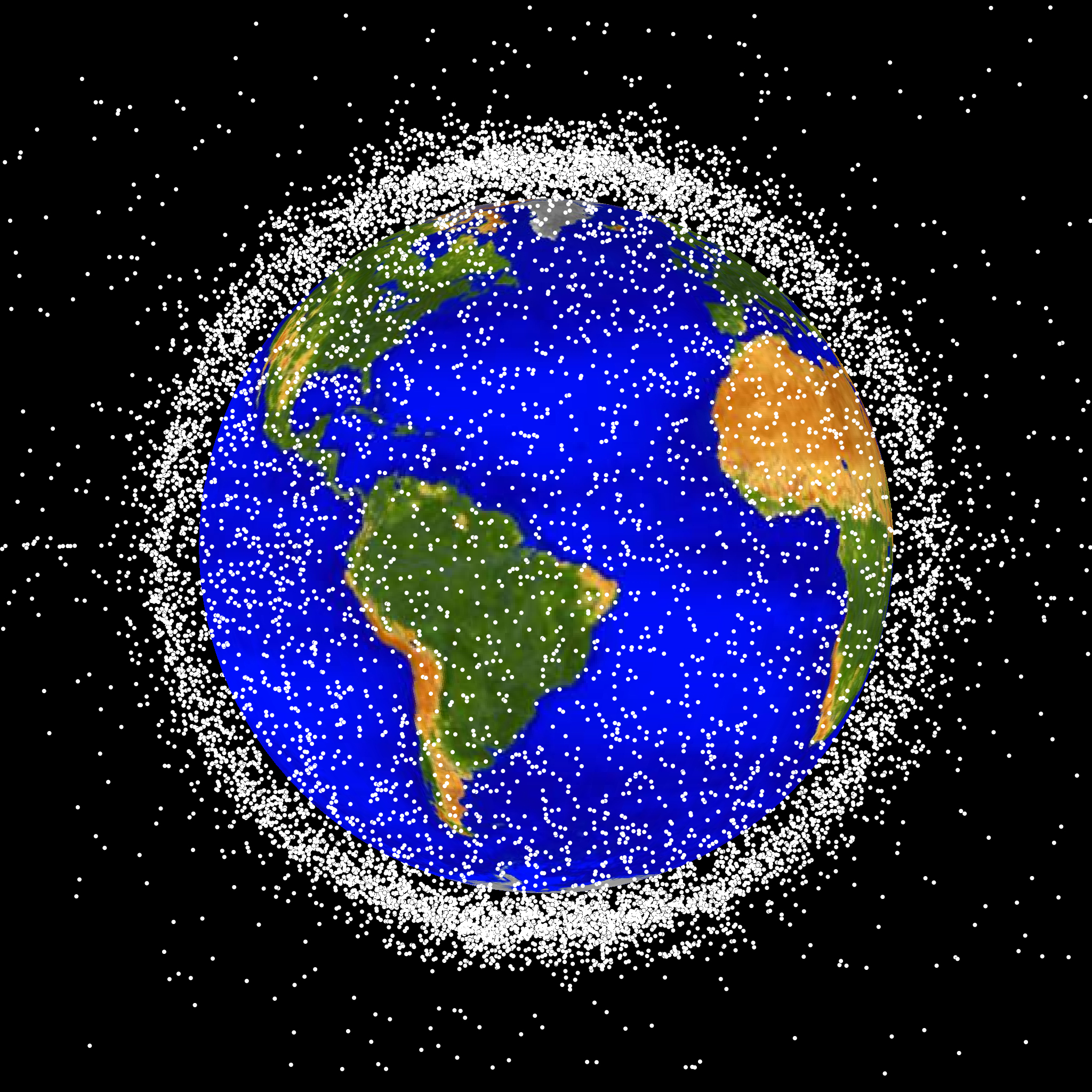
The Kessler Syndrome

LEO in 2019 (NASA)
In 1978 Donald J. Kessler and Burton G. Cour-Palais published Collision Frequency of Artificial Satellites: The Creation of a Debris Belt. Wikipedia notes that:
It describes a situation in which the density of objects in low Earth orbit (LEO) becomes so high due to space pollution that collisions between these objects cascade, exponentially increasing the amount of space debris over time.
This became known as the Kessler Syndrome. Three decades later, shortly after Iridium 33 and Cosmos 2251 collided at 11.6km/s, Kessler published The Kessler Syndrome, writing that the original paper:
predicted that around the year 2000 the population of catalogued debris in orbit around the Earth would become so dense that catalogued objects would begin breaking up as a result of random collisions with other catalogued objects and become an important source of future debris.
And that:
Modeling results supported by data from USAF tests, as well as by a number of independent scientists, have concluded that the current debris environment is “unstable”, or above a critical threshold, such that any attempt to achieve a growth-free small debris environment by eliminating sources of past debris will likely fail because fragments from future collisions will be generated faster than atmospheric drag will remove them.
Below the fold I look into the current situation.

Thursday, February 5, 2026

Mind The GAAP Again

Source
A bit over three months ago I wrote Depreciation and started with this graph from my 2022 post Generally Accepted Accounting Principles about the way Bitcoin miners were inflating their profits through misleading depreciation of their rigs.

The key message of the graph is the contrast between the 5-year straight-line depreciation and the curves showing the value of the remaining Bitcoin that the rig will generate. I suggested that the same mismatch between straight-line depreciation and remaining value generation would apply to AI hardware. I don't claim to be the first to flag this issue; The Economist's The $4trn accounting puzzle at the heart of the AI cloud was about a month earlier.

About a month later I returned to AI economics with Mind The GAAP, but that was mostly focused on other parts of the puzzle.But now, thanks to Bryce Elder's Big tech’s $680bn buy-now-book-later problem it turns out that both Michael Burry of The Big Short and Morgan Stanley Research agree with me that there's a problem:

Below the fold I go into the details, with many thanks to Bryce Elder.